
At Lock & Load GameFest this year, I had two seminars to teach, so I added a seminar where I demonstrated how to make decorative bases for your models.
I thought I’d show you some of the bases I used as examples in my seminars, all of which are very easy to make with polymer clay and any spare parts you might have lying around.
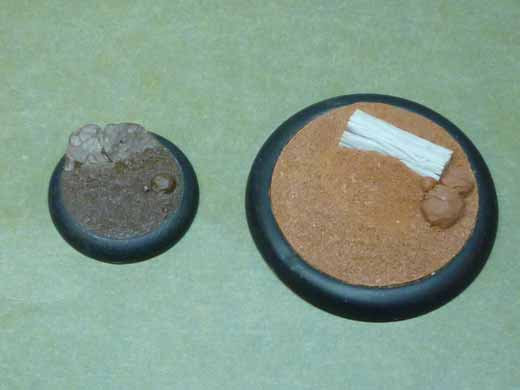
The first two bases are just plain grass, very easy to make with a toothbrush. I think this technique looks more like real grass than slapping some green paint on sand or model gravel. You can get more realistic results if you make small depressions in the grass to simulate uneven ground or a small hill on larger bases.
The log was a leftover from making the Woldwrath; I had a lot of spares, so I gave them to Leo Carson to use for his terrain. It’s good to keep stock parts lying around; you never know when you’ll need them or what they can be used for.
The rocks are made from leftover putty. When I mix up too much, I’ll shape the excess putty into a small ball and save it. Carving it with a knife makes some nice large rocks, and you won’t waste putty.
Next, I made some cobblestone and irregular flagstone bases, again using just polymer clay, a knife, and a sculpting tool. Polymer clay is a great material to work with. It has an unlimited working time and is very inexpensive compared to two-part epoxy putties. That working time comes in handy when you need to cover something as large as a 120 mm base.
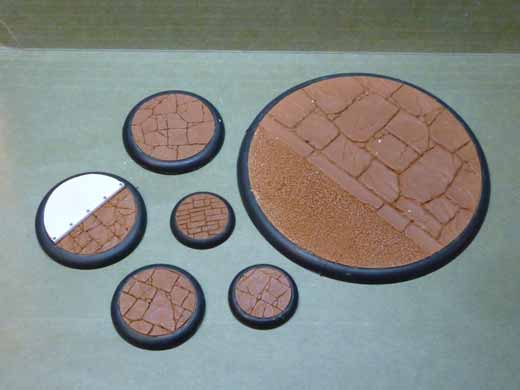
After your bases are cured, you can make small molds of them and cast them in resin. Make as many as you need.
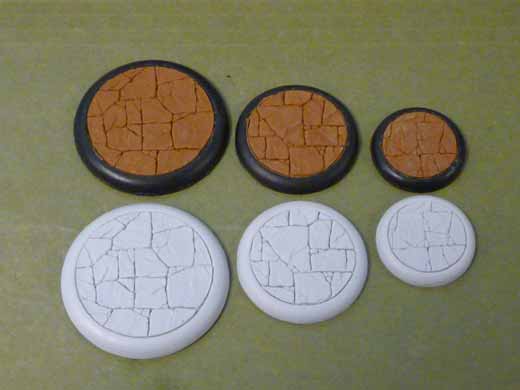
Here are some resin castings I made. These have been painted by studio painter Meg Maples. They look much nicer when painted, and if your bases have small flaws in them, like fingerprints, those will be hidden or covered up by the paint.
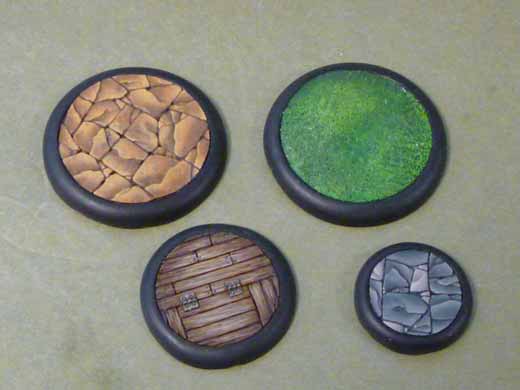
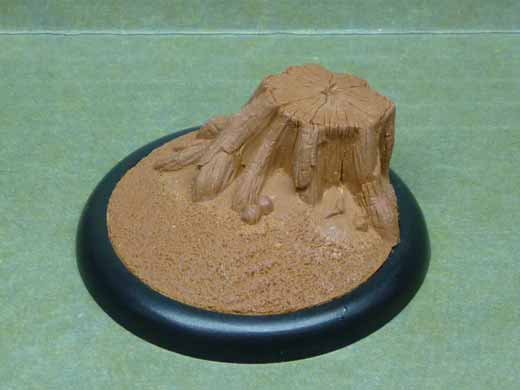
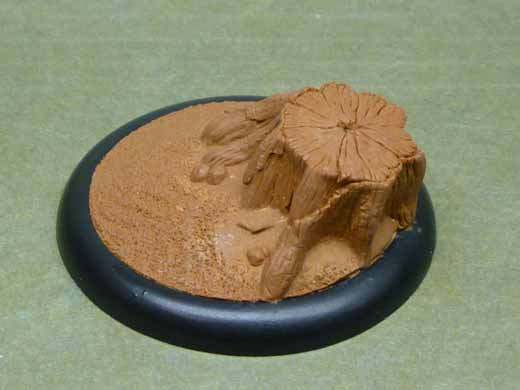
You can incorporate just about anything into your bases. Dig through your spare parts and start making some bases. Try making more complicated bases like tree trunks after you get some practice. Look up pictures of trees and logs to use as concept art.
That’s just a taste of some of the stuff I covered in one of my Lock & Load seminars. We’ll have lots of hobby seminars like these again at Lock & Load next year, so I hope I’ll see you there!